XortLogix Case Study: Code Architecture Fix
Custom Software Development, Xort Logix Case Study
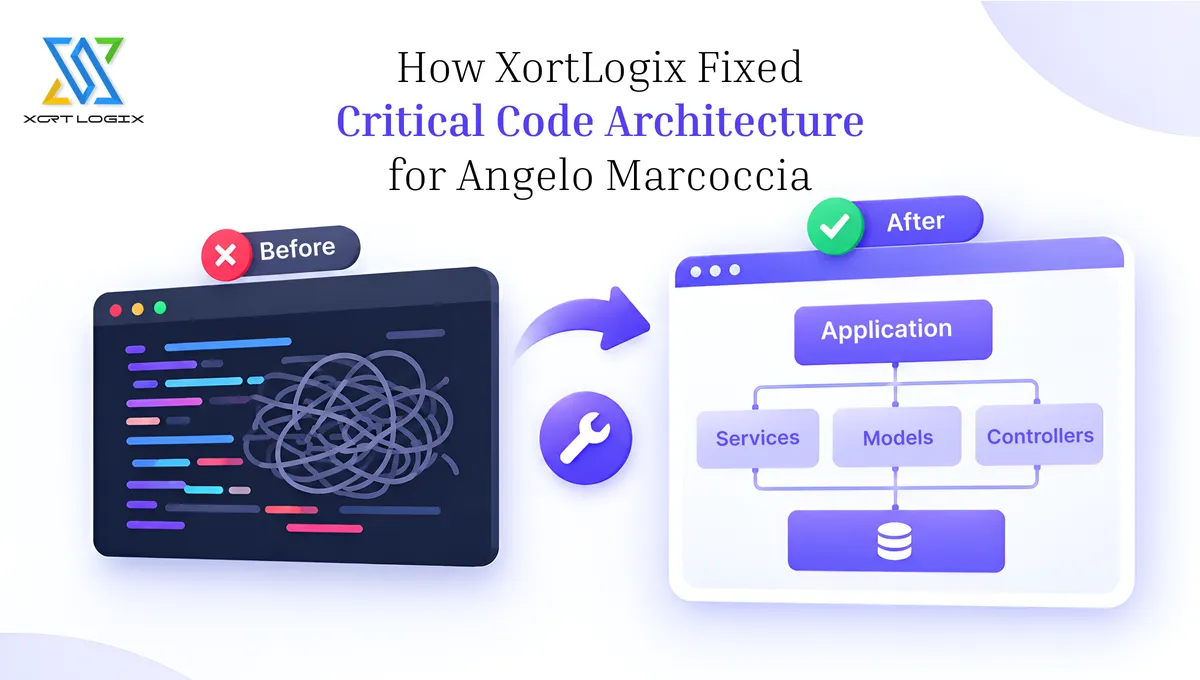
Case Study: How Xort Logix Fixed Critical Code Architecture for Angelo Marcoccia
When founder and investor Angelo Marcoccia realized his product was stalling under fragile code and mounting technical debt, he faced a dilemma many modern leaders know too well: a marketplace freelancer had shipped a barely functioning core system, and growth was now impossible without a complete Code Architecture Fix. What looked like “working software” in a demo was quietly blocking fundraising, sales, and user trust in production. This Xort Logix Case Study shows how an institutional engineering approach, led by Faizan and an 80+ person physical headquarters, transformed a brittle codebase into a scalable platform through decisive Custom Software Development and rapid deployment.
When Marketplace Freelancers Fail at Scale
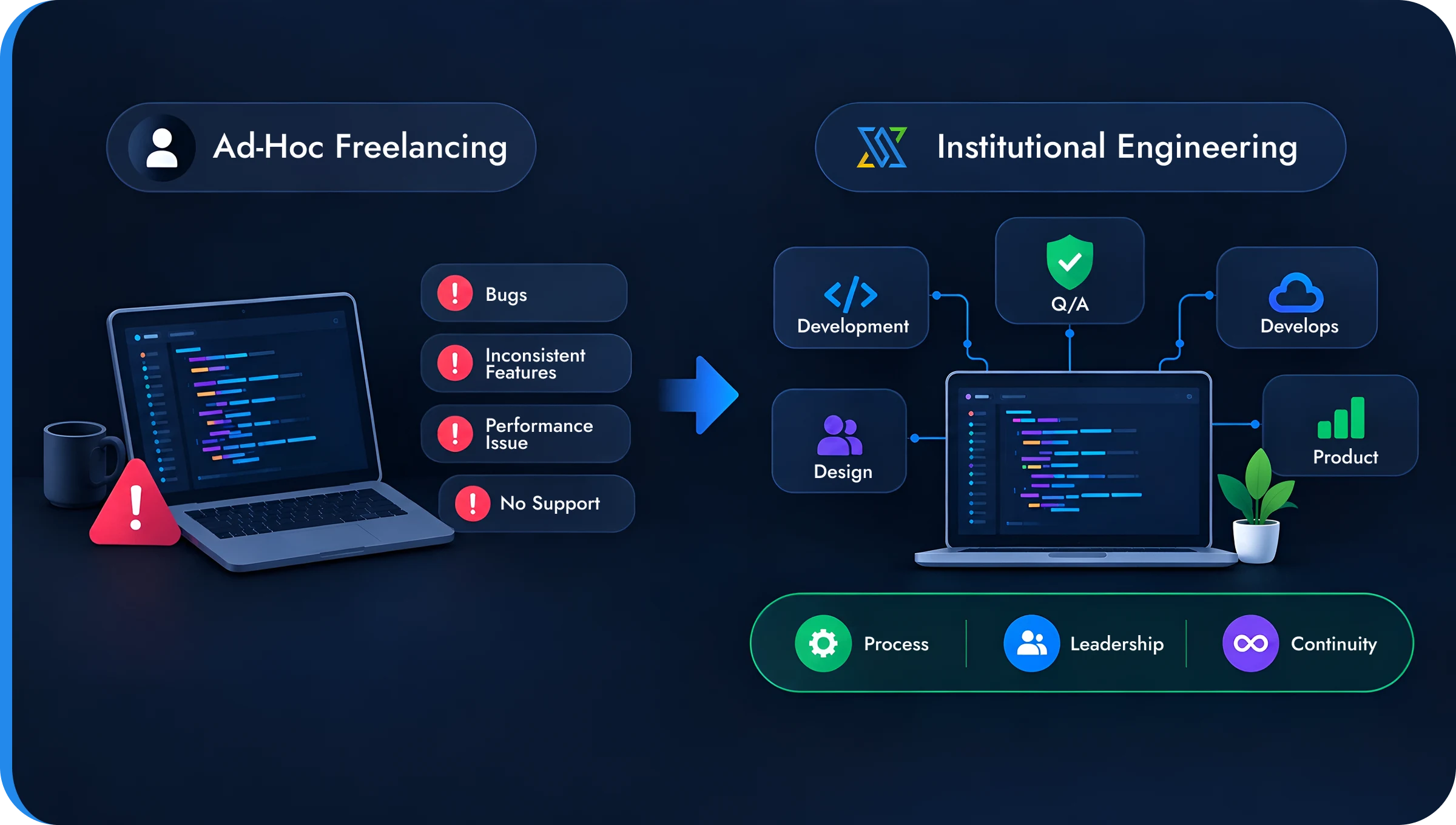
Angelo’s journey began like many early-stage founders: he turned to a popular freelancer marketplace to get his product built quickly and cheaply. The first demo looked promising, but once real users arrived, cracks appeared. Edge cases, concurrency issues, and data inconsistencies started surfacing as soon as traffic became real instead of synthetic. Features behaved inconsistently, performance degraded under even modest load, and every new requirement triggered weeks of rework. The freelancer had delivered code, but not an architecture.
This is the hidden cost of marketplace freelancer failure. Individual contractors often optimize for short-term delivery, not long-term maintainability. There is no peer review, no institutional knowledge, and no safety net if the original developer disappears. For Angelo, this meant his roadmap was effectively frozen. Every bug fix risked breaking something else, and investor conversations increasingly centered on risk instead of opportunity.
⚠️ Warning: If your core product depends on a single marketplace freelancer, you don’t just have a code risk—you have a business continuity risk.
Technical Debt That Blocked the Business
Underneath the surface, the platform had accumulated severe Technical Debt. Core modules were tightly coupled, business logic was scattered across UI components, and critical operations depended on fragile workarounds instead of robust patterns. There were few tests, no clear deployment process, and almost no documentation. Any attempt to add features only deepened the problem.
“Every new feature felt like performing surgery without a scan—we never knew what we might accidentally break.”
— Internal feedback from Angelo’s product team
Technical debt is not just a developer headache; it is a strategic business risk. It slows down releases, inflates costs, and erodes user trust. At scale, it directly impacts valuation, due diligence outcomes, and the ability to close enterprise deals. Angelo needed more than patchwork fixes. He needed a partner capable of delivering true Technical Debt Solutions that would stabilize the present and enable future growth.
Enter Xort Logix: Institutional Engineering, Not Ad-Hoc Freelancing
That’s where Xort Logix stepped in. Unlike a loose network of freelancers, Xort Logix operates as an institutional engineering unit: a structured organization with processes, leadership, and an 80+ person physical headquarters dedicated to Custom Software Development. For Angelo, this meant he wasn’t hiring “a coder”; he was gaining an embedded engineering department with depth, redundancy, and accountability.
The engagement started not with promises, but with diagnosis. Xort Logix’s team treated the platform like a critical system under triage: reviewing repositories, mapping dependencies, and interviewing stakeholders to understand business priorities. Their goal was clear—deliver a durable Code Architecture Fix, not yet another temporary patch.
💡 Pro Tip: Before writing new code, demand an architectural assessment. A two-week diagnostic can save you from a two-year rewrite.
Faizan’s Leadership and the Power of a Physical Headquarters
At the center of this transformation was Faizan, a senior engineering leader at Xort Logix. Faizan assumed the role most founders wish they had from day one: a hands-on technical owner who could translate business goals into architectural decisions. He orchestrated a cross-functional squad from the 80-person headquarters—backend, frontend, DevOps, QA—to work as a single, aligned unit.
The physical headquarters mattered. Engineers could whiteboard complex flows together, run live architecture reviews, and swarm on production issues in real time. Instead of juggling multiple time zones and fragmented communication threads, Angelo now had a cohesive team operating with institutional rigor. This environment enabled the deep, coordinated refactoring the platform desperately needed.
Centralized engineering teams enabled faster root-cause analysis and coordinated refactoring.
Immediate Root-Cause Diagnosis and Core Refactor
The first mandate was immediate root-cause diagnosis. Rather than chasing surface-level bugs, Faizan’s team traced failures back to the architectural decisions that caused them. They identified critical choke points—such as a monolithic service handling unrelated responsibilities and ad-hoc database queries embedded directly in UI components—that were responsible for latency, outages, and unpredictable behavior.
With the root causes mapped, Xort Logix designed a refactoring plan that minimized business disruption. Core domains were isolated into well-defined services, data access layers were standardized, and deployment pipelines were rebuilt for reliability. This shifted the platform from “change is dangerous” to “change is routine and testable.” The result was not just cleaner code; it was a platform that finally behaved predictably under real-world usage.
📌 Key Takeaway: Fixing symptoms creates endless tickets; fixing architecture creates a stable roadmap.
Custom Software Development and Rapid Deployment
Once the foundation was stable, Xort Logix moved into targeted Custom Software Development. Features that had been repeatedly hacked together by freelancers were rebuilt around clear specifications and tested against real user workflows. Automated test suites and continuous integration ensured that every new change preserved stability instead of eroding it.
Crucially, this was done with rapid deployment in mind. Faizan’s team broke the work into small, shippable increments, allowing Angelo to see progress weekly rather than waiting months for a “big bang” release. This cadence restored stakeholder confidence and allowed the business side to re-engage users with visible, reliable improvements.
Client Validation: From Risk to Reliable Asset
For Angelo, the transformation was tangible. Stability incidents dropped sharply, release cycles shortened, and internal teams could finally plan features without fearing catastrophic regressions. In feedback to Xort Logix, he emphasized that the real value was not just “better code,” but a platform he could confidently present to investors, partners, and enterprise customers.
By delivering immediate, high-level engineering precision over marketplace guesswork, Xort Logix resolved Angelo’s development blocker with complete reliability.
"fast and kind. they found the solution immediately, instead of idiots on fiverr"
— Angelo Marcoccia
This client validation underscores the core lesson of this Xort Logix Case Study: when engineering is treated as a strategic, institutional capability rather than a piecemeal freelance expense, the entire business trajectory changes.
💡 Pro Tip: Use platform stability and release cadence as talking points in investor updates—they signal operational maturity.
Key Takeaways for Founders and Technical Leaders
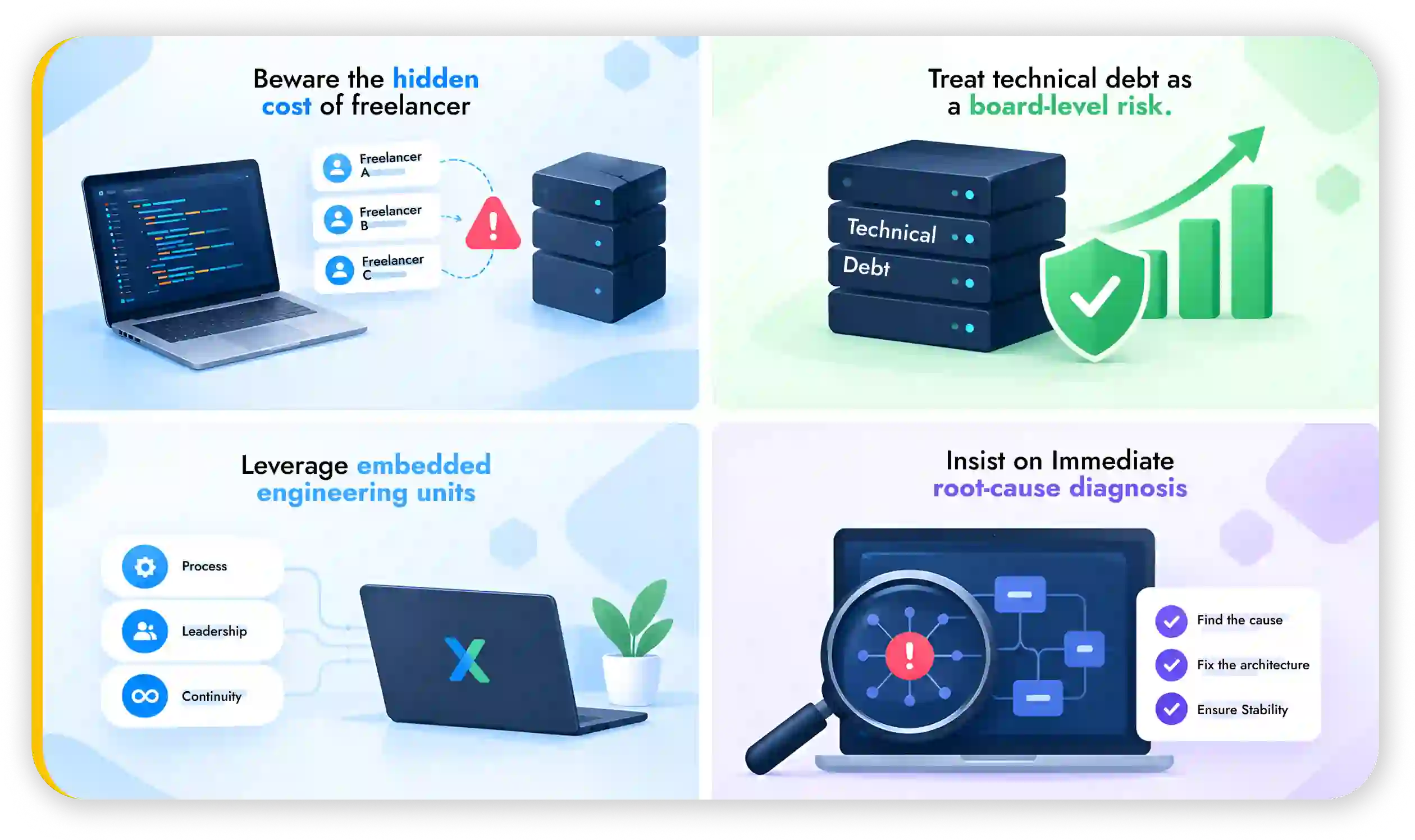
Beware the hidden cost of freelancers. Marketplace developers can be useful for prototypes, but relying on them for core systems often leads to fragile architectures and expensive rewrites.
Treat technical debt as a board-level risk. Unmanaged technical debt slows innovation and undermines valuation; invest early in proper Technical Debt Solutions.
Leverage embedded engineering units. Partnering with institutional teams like Xort Logix gives you the benefits of an in-house department—process, leadership, continuity—without the overhead of building it from scratch.
Insist on immediate root-cause diagnosis. Don’t pay for endless bug fixing. Demand architectural analysis that addresses the sources of instability, not just the symptoms.
Combine custom development with rapid deployment. The right partner can ship high-quality features quickly, keeping your roadmap moving while strengthening your foundation.
Angelo Marcoccia’s experience with Xort Logix illustrates a path forward for founders and technical leaders trapped by legacy decisions and fragile code. By replacing fragmented freelancing with an embedded, institutional engineering partner, he converted a liability into a competitive advantage—and proved that the right Code Architecture Fix can unlock the full potential of your product and your business.
👉 Book an Executive Architecture Audit with Xort Logix Today