Case Study: GHL Automation for Marketing Agencies
Case Study, GoHighLevel, Operations, Marketing Agencies, Automation
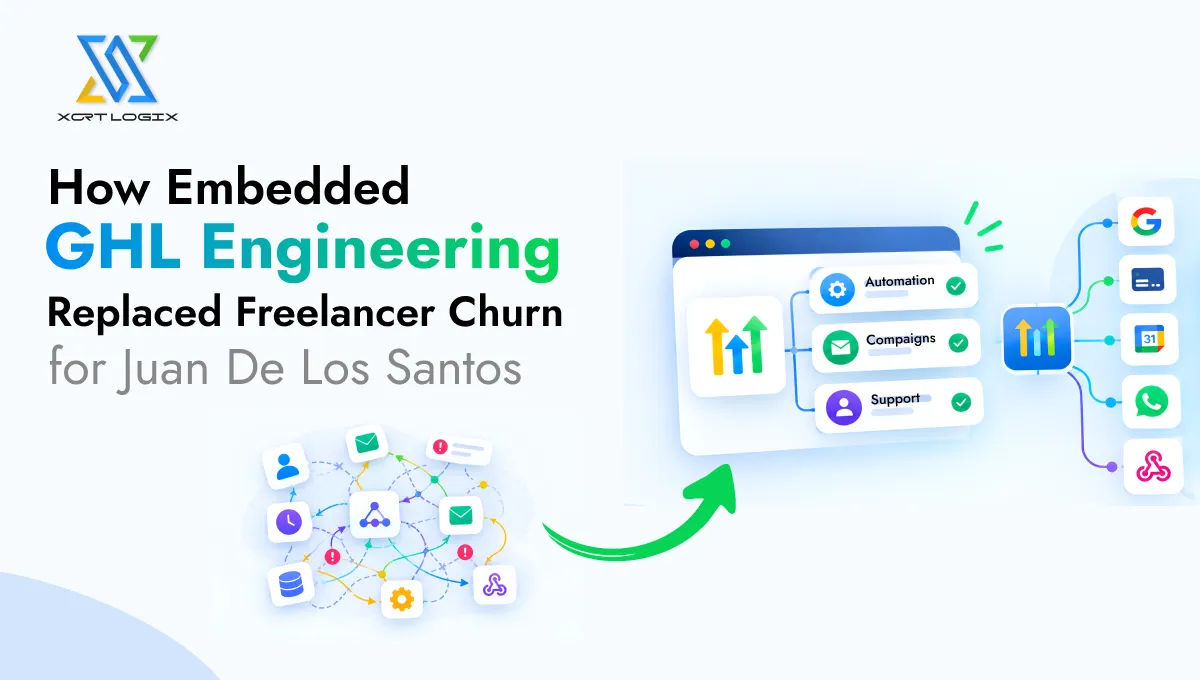
Case Study: How Embedded GHL Engineering Replaced Freelancer Churn for Juan De Los Santos
When your agency runs on GoHighLevel (GHL), “good enough” technical support works—until it doesn’t. This is the story of how agency owner Juan De Los Santos outgrew task-based freelancers, hit a hard ceiling on scale, and ultimately replaced churn and chaos with an embedded GHL Automation Squad backed by an 80-person engineering headquarters at XortLogix.
The Hidden Technical Debt of Task-Based GHL Freelancers
Juan’s agency was booming. New clients were coming in weekly, each needing tailored funnels, pipelines, automations, and reporting inside GoHighLevel. To keep up, he relied on a rotating bench of task-based freelancers—specialists who could “knock out a workflow” or “fix a funnel” on short notice. On paper, it was flexible and cost-effective. In practice, it quietly created a mountain of technical debt.
Task-based freelancers are incentivized to deliver the task, not to design a cohesive ecosystem. Over time, Juan’s GHL instance became a patchwork of different naming conventions, logic patterns, and partial fixes. Workflows were duplicated instead of refactored. Tags multiplied without structure. Triggers overlapped and occasionally fought each other. Everything “worked”—until volume spiked and the cracks turned into outages and missed opportunities.
📌 Key Insight: Task-based execution inside a high-volume GHL ecosystem almost always trades speed today for complexity tomorrow. That complexity is technical debt, and it compounds as you scale.
Capacity Ceilings: When Freelancers Can’t Scale With Your Pipeline
As Juan’s client roster grew, his freelancer model hit a predictable wall: capacity ceilings. Each freelancer had their own schedule, their own limits, and their own list of other clients. When a big launch hit or multiple clients requested changes at once, delivery times stretched from hours to days—or worse, weeks. Revenue opportunities slipped while the team played calendar Tetris just to get basic automations live.
One freelancer was great at funnels but unavailable during critical launches.
Another could handle complex automations but only part-time and in a different time zone.
A third handled API connections but refused to troubleshoot issues they hadn’t built.
The result was a brittle production line. The more Juan sold, the more he became a bottleneck—coordinating multiple freelancers, chasing updates, and trying to align capacity with client demand. Scale was technically possible, but operationally fragile.
Communication Friction and Inconsistent Technical Execution
Beyond capacity, Juan faced two daily frustrations: communication friction and inconsistent technical execution. Every freelancer had their own preferred tools, documentation habits, and assumptions about “best practice” inside GHL. There was no shared playbook, no central architecture, and no continuity from one project to the next.
He had to re-explain his business model and client avatars to every new freelancer.
Simple changes required long message threads to clarify “what this workflow is supposed to do.”
Some builds were elegant and efficient; others were hacked together and hard to maintain.
This inconsistency translated directly into risk. When something broke, Juan often didn’t know who had built it, where to find the logic, or how many other workflows it might affect. Fixing one issue could easily create two more. The GHL instance was functioning, but it wasn’t engineered. It was a collection of tasks, not a system.
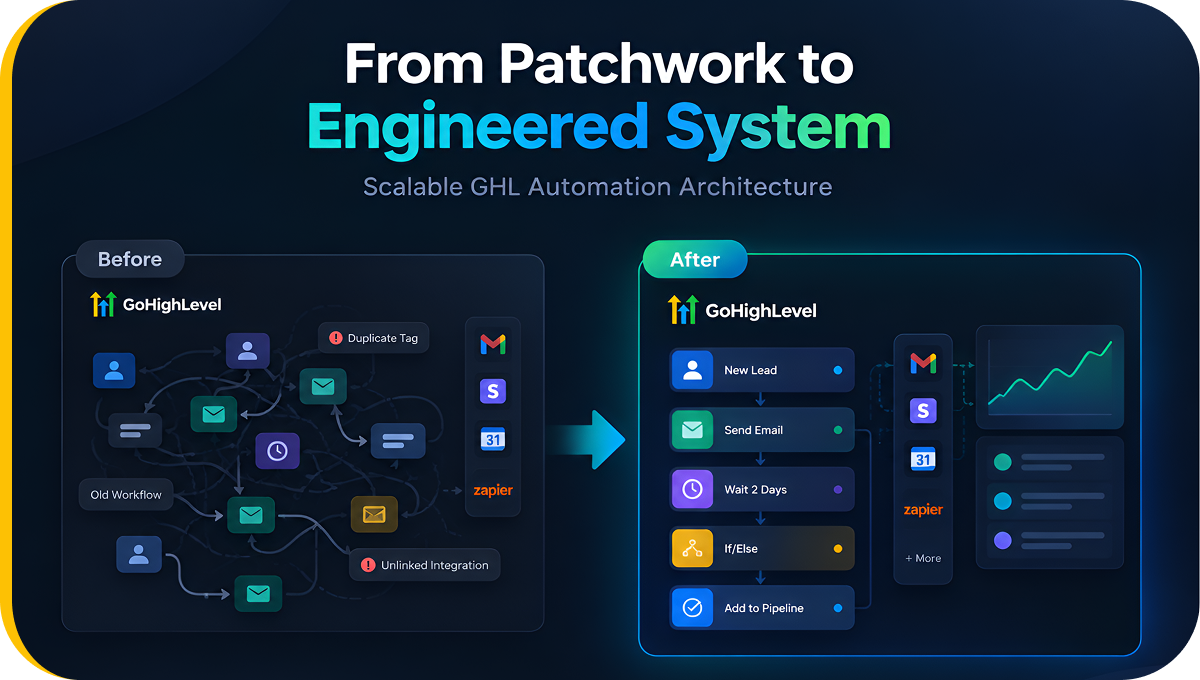
A unified squad replaces scattered freelancers with one coherent automation architecture.
Enter XortLogix: An Embedded GHL Automation Squad, Not Another Freelancer
Juan didn’t need “more freelancers.” He needed a dedicated execution unit that could think in systems, not tasks. That’s where XortLogix came in—with an embedded GHL Automation Squad backed by an 80-person engineering headquarters. Instead of another individual contributor, Juan gained a multi-disciplinary team that operated as an extension of his agency.
The squad brought together GHL specialists, integration engineers, QA analysts, and solution architects under one coordinated umbrella. They owned the ecosystem end-to-end: strategy, architecture, implementation, optimization, and documentation. For Juan, that meant one point of contact, one shared playbook, and one accountable team responsible for the entire GHL stack.
💡 Pro Tip for Agency Leaders: Treat GHL as core infrastructure, not a side project. Infrastructure deserves an engineering team, not a revolving door of task-doers.
Advanced Workflow Architecture: From Patchwork to Engineered System
The first priority for the XortLogix squad was to replace ad-hoc builds with advanced workflow architecture. Instead of one-off automations, they designed reusable patterns, modular workflows, and clear naming conventions that made the entire system observable and maintainable at scale.
Standardized triggers, tags, and pipelines across all client accounts.
Centralized logic for lead routing, nurturing, and lifecycle stages.
Modular workflows that could be cloned, adjusted, and redeployed without introducing conflicts.
This architecture-first approach dramatically reduced technical debt. Changes could be made in one place and cascade cleanly. New client builds became faster and more predictable. And when something broke, the squad could trace it through a clearly documented logic map instead of reverse-engineering a freelancer’s one-off fix from six months ago.
Custom Integrations That Extend GHL Beyond Its Native Limits
Juan’s agency didn’t operate in a GHL-only bubble. His clients used CRMs, payment processors, booking tools, analytics platforms, and internal dashboards. Previously, each integration request became a separate freelancer project—with varying quality and little long-term support. XortLogix changed that with custom integrations engineered and maintained by their central headquarters team.
Stable, monitored API connections between GHL and key third-party tools.
Data synchronization routines that preserved data integrity and reporting accuracy.
Custom middleware where needed, ensuring GHL could plug into existing client tech stacks seamlessly.
Instead of one-off scripts and Zapier chains that no one wanted to touch, Juan now had integrations that were documented, monitored, and owned by a team whose job was to keep them healthy over time.
Proactive System Optimization: From Firefighting to Continuous Improvement
Perhaps the biggest shift came from moving beyond reactive fixes to proactive system optimization. The XortLogix squad didn’t wait for something to break. They monitored key performance and reliability indicators across Juan’s GHL environment and acted before issues turned into client-facing problems.
Regular audits of workflows to eliminate redundancies and reduce automation bloat.
Performance tuning for high-volume campaigns to prevent slowdowns and missed triggers.
Ongoing refinement of lead scoring, routing, and follow-up logic based on real campaign data.
For Juan, this meant fewer emergencies, smoother launches, and the confidence that his GHL backbone was getting stronger every month instead of more fragile.
Client Validation: Juan’s 5-Star Review of Embedded Engineering
“Working with Naeem and the entire team at Xort Logix has been absolutely phenomenal. Their professionalism, expertise, and dedication to delivering high-quality results truly stand out. They are extremely knowledgeable in Go High Level, automation systems, and advanced workflow solutions, and they consistently go above and beyond on every project we’ve worked on together.
No matter the task, client request, or complexity of the project, their team has always been able to execute efficiently, meet deadlines, and deliver with precision. Their communication, technical knowledge, and problem-solving abilities make them an incredible partner to work with.
If you’re looking for a reliable team that understands automation, Go High Level, and scalable systems, Xort Logix is definitely the team to use. Highly recommended.”
— Juan De Los Santos
🔗 ⭐ View Verified Review on Google Business Profile
Key Takeaways for Agency Leaders and Operations Directors
Juan’s experience highlights a shift many agencies eventually face: the move from fragmented freelance support to embedded engineering. For agency leaders and operations directors running high-volume GHL ecosystems, three takeaways stand out.
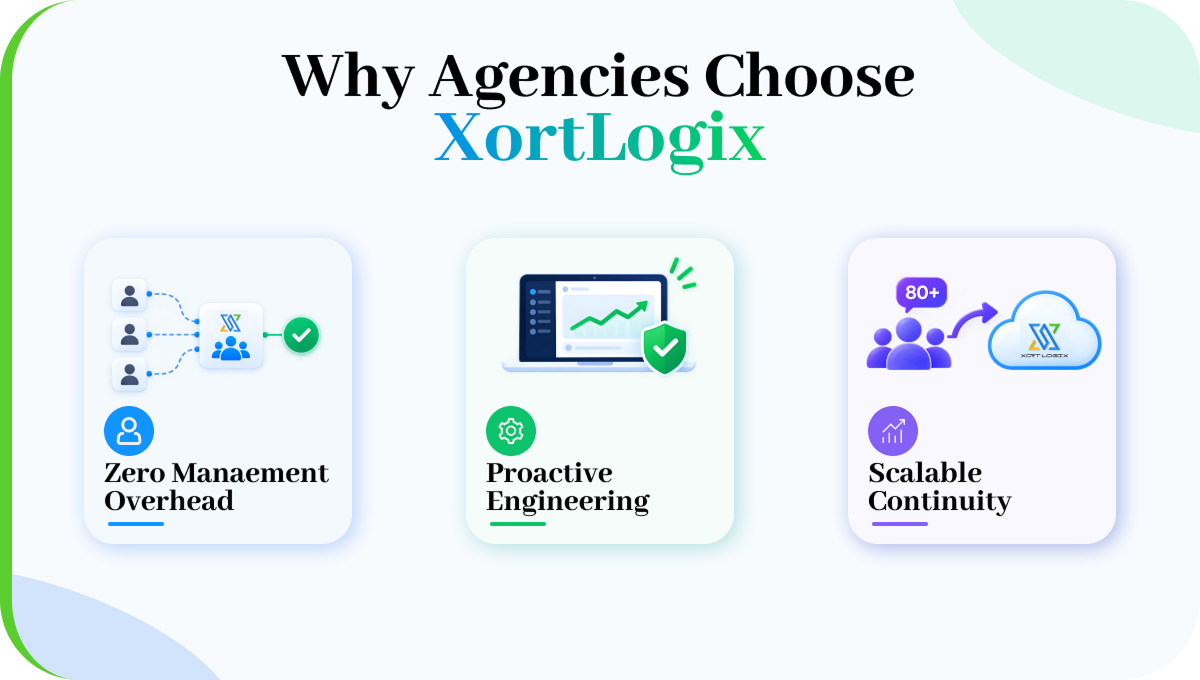
Zero Management Overhead: Instead of coordinating multiple freelancers, you work with one integrated squad. XortLogix handles resourcing, knowledge transfer, QA, and documentation. You focus on clients and strategy, not project management and technical babysitting.
Proactive Engineering: Your GHL instance stops being a collection of quick fixes and becomes a living system that’s monitored, optimized, and improved over time. Problems are prevented, not patched after the fact.
Scalable Continuity: With an 80-person engineering headquarters behind your squad, you’re never dependent on a single individual. Knowledge is shared, processes are standardized, and capacity flexes with your growth curve.
📌 Key Takeaway: The real ROI isn’t just faster task completion—it’s the ability to scale your agency without your operations breaking under the weight of technical debt.
Ready to Upgrade Your GHL Execution Units?
If your GHL environment already feels like Juan’s did—scattered workflows, unreliable freelancers, and a constant sense that one wrong change could topple everything—it’s a signal that you’ve outgrown the task-based model. High-volume, revenue-critical systems demand dedicated specialist squads, not a patchwork of part-time help.
XortLogix’s embedded GHL Automation Squads give you exactly that: a team that behaves like an internal engineering department, powered by an 80-person headquarters, but delivered as a flexible, scalable service. You get advanced workflow architecture, robust custom integrations, proactive system optimization, and a level of continuity that freelancers simply can’t match.
Instead of wondering whether your next big campaign will overwhelm your systems—or your freelancers—imagine knowing that an expert squad has already stress-tested, optimized, and bulletproofed your GHL environment ahead of launch. That’s the difference between surviving growth and engineering it.
If you’re ready to replace freelancer churn with embedded engineering, it’s time to upgrade your GHL execution units. Connect with XortLogix and deploy a dedicated GHL Automation Squad that can scale with your ambitions—and finally turn your GoHighLevel instance into the reliable, revenue-driving engine it was meant to be.