Why We Built an 80+ Person Technical Hub: The Systems Engineering Behind XortLogix
Systems Engineering, CRM Architecture, Enterprise Technology
Why We Built an 80+ Person Technical Hub: The Systems Engineering Behind XortLogix
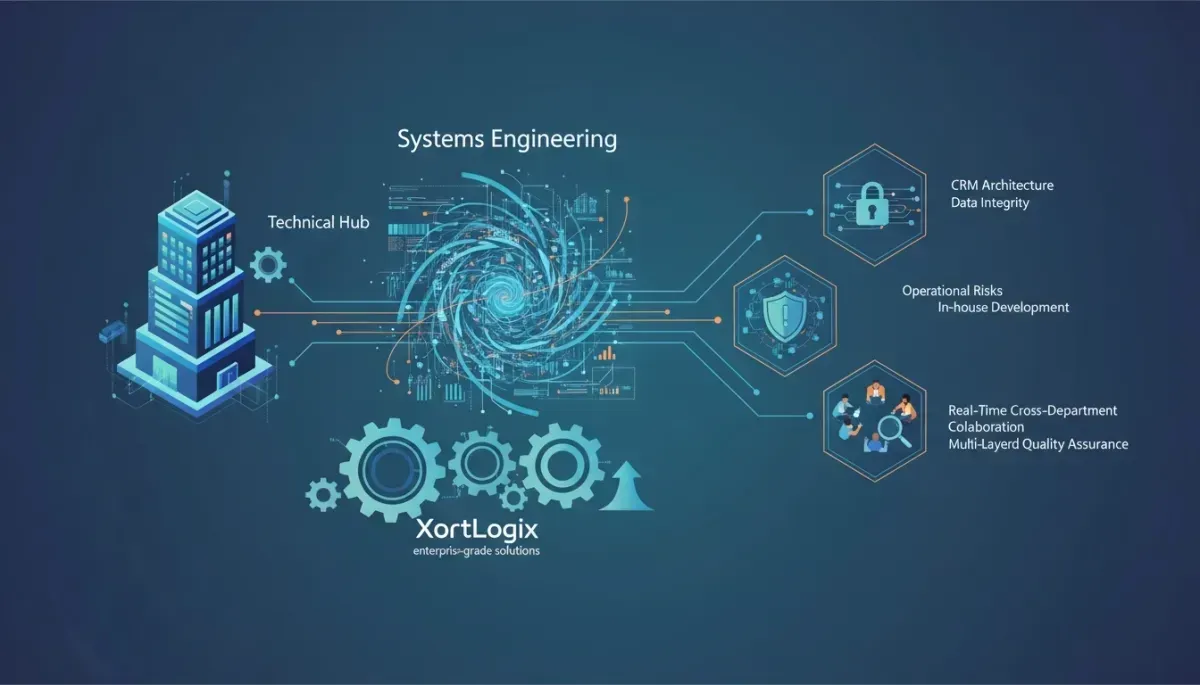
For businesses and agencies, CRM is no longer “just software.” It is the operational backbone that connects sales, marketing, service, finance, and compliance. At XortLogix, we built an 80+ person Technical Hub because delivering this kind of mission-critical infrastructure demands disciplined systems engineering, not ad‑hoc development. Our hub is the engine behind robust CRM architecture, guaranteed data integrity, and reduced operational risk—backed by enterprise-grade solutions and productized IP that respect system architecture from day one.
Why a Dedicated Technical Hub Matters for Modern CRM
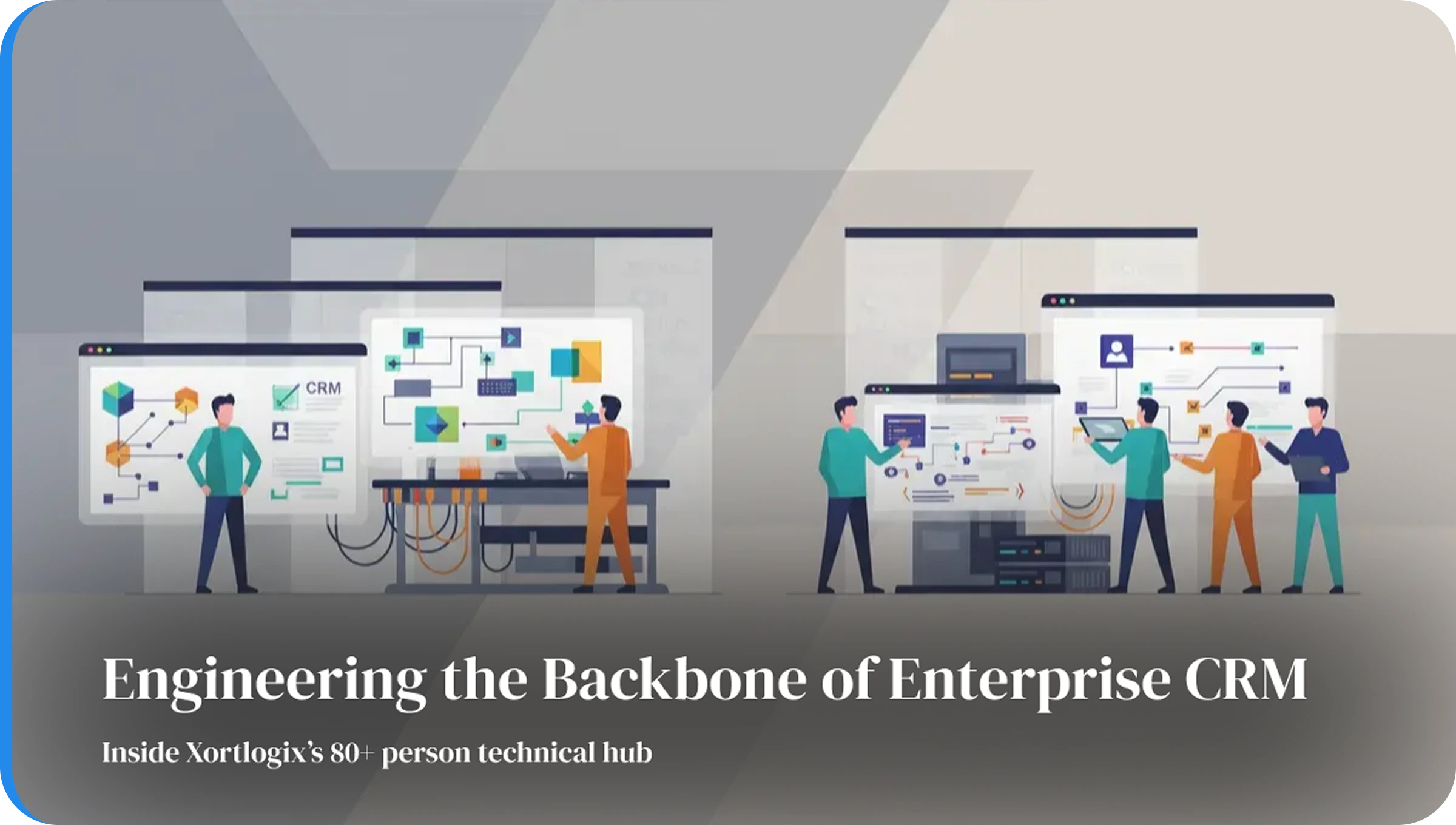
A Technical Hub is more than a large team of developers. It is a centralized, cross-functional environment where architects, systems engineers, data specialists, QA analysts, security experts, and product owners work in real time around a shared blueprint. For businesses and agencies, this centralization translates into coherent CRM architecture rather than a patchwork of loosely connected tools and plugins.
When your CRM touches every department, small design decisions have big operational consequences. A Technical Hub ensures that requirements from sales operations, marketing automation, finance, legal, and compliance are captured, reconciled, and engineered into a unified system—before a single line of code is written. This is the foundation of stability and scalability at XortLogix.
Systems Engineering: The Discipline Behind Robust CRM Architecture
At the core of our Technical Hub is Systems Engineering—the discipline of designing, integrating, and managing complex systems over their entire lifecycle. Instead of treating CRM as a collection of screens and workflows, we treat it as a living ecosystem with defined inputs, outputs, dependencies, and constraints across your entire organization.
This systems thinking drives our CRM architecture. We map how data moves between lead capture, opportunity management, billing, support, and analytics. We model failure modes, performance bottlenecks, and security boundaries. By respecting system architecture at every stage, we ensure that new features, integrations, and automations plug in cleanly instead of introducing hidden fragility.
Data Integrity and Operational Risk: Designed, Not Assumed
For enterprises, data integrity is non‑negotiable. Duplicate records, broken syncs, or inconsistent fields are not just annoyances—they distort reporting, misalign teams, and can trigger compliance failures. Our Technical Hub embeds data engineers and systems architects into every CRM initiative to define canonical data models, validation rules, and reconciliation processes from the outset.
This same rigor is how we mitigate operational risks. We design for auditability, traceability, and controlled change. Every integration, automation, and workflow is assessed for impact on upstream and downstream systems. Rollback strategies, monitoring, and alerting are part of the initial design—not an afterthought once something breaks in production. The result is a CRM environment that supports growth without introducing hidden liabilities.

Cross-functional design reviews catch data and process risks before they reach production.
In‑House Development vs. Remote Freelancer Networks
Many organizations experiment with distributed freelancer networks to accelerate delivery. While this can work for isolated tasks, it breaks down when you are engineering complex systems that must operate as a single, reliable whole. XortLogix made a deliberate choice to invest in in‑house development within our Technical Hub, rather than rely on loosely coordinated contractors.
With in‑house teams, we achieve real‑time cross‑department collaboration. Architects can walk across the room to consult with security, QA can sit in on design sessions, and product leads can align priorities with engineering in hours, not weeks. This immediacy is impossible to replicate with remote freelancer networks spread across time zones and communication tools.
Multi‑Layered Quality Assurance and Supervised Operational Integrity
Enterprise CRM demands multi‑layered quality assurance. At XortLogix, QA is integrated at every stage: specification reviews, architecture validation, automated test suites, performance testing, and user acceptance. Because our QA specialists are embedded in the Technical Hub, they understand the full system context, not just the feature in front of them. This dramatically reduces regressions and side‑effects across your stack.
Beyond QA, we maintain supervised operational integrity. Dedicated reliability and operations engineers oversee how CRM components behave in real environments. They monitor capacity, latency, error rates, and data pipelines, feeding insights back into design and development. This closed feedback loop—only possible with a cohesive in‑house hub—keeps systems healthy as your business and data volumes grow.
From Complex Engineering to Enterprise-Grade Solutions and Productized IP
Our 80+ person Technical Hub is not just a delivery engine; it is a factory for enterprise‑grade solutions and productized IP. Because we consistently apply systems engineering principles and respect system architecture, patterns emerge—reusable modules for consent management, role‑based access control, audit logging, data synchronization, and more. We refine these into well‑tested, reusable components that become part of the XortLogix IP portfolio.
For clients, this means faster time‑to‑value and lower risk. Instead of reinventing the wheel on every project, we draw from a library of proven building blocks that already embody best practices for data integrity, security, and operational resilience. These components are then tailored to your unique requirements within a coherent, end‑to‑end CRM architecture.
The Strategic Advantage for Businesses and Agencies
For businesses and agencies, partnering with a provider that operates a true Technical Hub is a strategic decision. You gain a team that thinks in systems, not tickets; that treats CRM as critical infrastructure, not a collection of screens; and that builds for integrity and risk mitigation from the ground up. XortLogix’s approach—anchored in systems engineering, in‑house development, and disciplined architecture—gives you a CRM foundation you can trust as you scale, diversify services, and navigate increasing regulatory demands.
In a landscape where customer expectations, data volumes, and compliance obligations are all rising, the cost of fragile systems is simply too high. Our 80+ person Technical Hub exists so that your CRM doesn’t just keep up—it becomes a reliable, extensible backbone for long‑term growth.